
I thought I was prepared the first time I bought a car by myself. I learned that doing research and having a plan are not the same thing.
Americans spend about 1 hour in their car daily, according to AAA’s 2023 survey. Transportation accounted for roughly $1 in every $6 households spent in 2024, according to the BLS, and we know gas isn’t getting any cheaper! Car purchases affect our finances and daily life for years.
Car buyers spent about 14 hours researching, shopping, and buying a vehicle, according to Cox Automotive’s 2025 study.
Honestly? I think that can be enough if the time is well spent.
That’s where Better Plans, Better Life can help: working through questions like, “What does this car need to do for your life?” and “What are you willing to compromise on?” before those hours disappear into aimless browsing or rambling dealership conversations, even if you get free snacks.
I know how the hours disappear because it happened to me.
I Thought I Had a Plan
The first time I bought a car by myself, I thought I came prepared. I had done my homework, knew the car I was interested in, and certainly didn’t feel like I was walking into the dealership blind.
Then it was time to start talking numbers. The young salesman brought his manager over to take over the conversation. I’m an engineer, the numbers are the easy part! I was ready to go!
Well, I was immediately caught off guard when he started to focus on the monthly payment. I had my total budget, but what monthly payment was I trying to stay under?
It turns out I didn’t understand the process nearly as well then as I thought I did from my research. Dealers can adjust financing terms to make the monthly payment look more comfortable while increasing your total cost. The process wasn’t some hidden secret either. I could have seen this coming because the Consumer Financial Protection Bureau recommends comparing the loan amount, interest rate, term, monthly payment, and total cost as part of the purchasing process.
I still walked out with a car I was happy with…mostly.
It had hail damage.
Nothing catastrophic. The car drove fine, and most of the time I completely forget about it. But every once in a while, the light hits the body just right and I notice those dents again. It’s a painful reminder that I hadn’t used my 14 hours to their potential.
That gap between researching something and planning a decision eventually became part of Better Plans, Better Life.
Better Plans didn’t exist when I made my first car purchase. It didn’t technically exist the next time either. But by then, I had years of engineering experience, lessons from that first purchase, and a much more systematic way of approaching big decisions.
The next car purchase went very differently.
This Time, We Started With the Problem
A few years later, my wife and I needed another vehicle.
We started by thinking about what are we actually trying to accomplish?
| What mattered | Why it mattered |
|---|---|
| AWD | Winter driving and driver confidence |
| Safety | Planning for a family |
| Three rows | Room for the family to grow |
| Reliability | Long ownership horizon |
| Reasonable mileage | Preserve useful life |
| Second-row bucket seats | Easier access with future kids |
| Apple CarPlay | Our one must-have luxury |
Suddenly, we weren’t scrolling through listings waiting for a vehicle to convince us.
Taken together, those requirements eventually led us toward the Honda Pilot and, more specifically, the trims that had the combination of seating, mileage, features, and price we wanted. A huge used-car market had suddenly become much smaller.
That’s what a good plan should do.
Map What’s Actually Possible
As with all car purchases and big decisions done with Better Plans, we looked at our available resources.
For us, that meant comparing what we wanted with what actually existed in the market at a price we were willing to pay. We looked at other vehicles, including the Toyota Highlander, but comparable options tended to cost more, sacrifice on our priorities, or provide features that we didn’t want to pay for. Maybe it was just our Honda loyalty…

Anyways, once we layered those realities onto what mattered, we ended up with two strong specific car candidates. We had two options we would actually be happy owning and had the resources to buy them.
Mock Up & Try: Drive the Car
When you’re upgrading your car from 2004 to a car from the late 2010’s, every car feels like a Lamborghini. It was still worth test driving the cars. Better Plans calls this Mock Up & Try.
A test drive can tell you whether the size feels manageable, whether the seats and layout are comfortable, and whether you can actually picture using the second row the way you imagined with kids. It’s a cheap chance to discover that something you liked on paper doesn’t work in reality.
Give reality a chance to revise your plan.
Pull It Together
Eventually, we knew what we wanted, and we made the choice, one that hopefully won’t result you losing your trust in me and Better Plans.
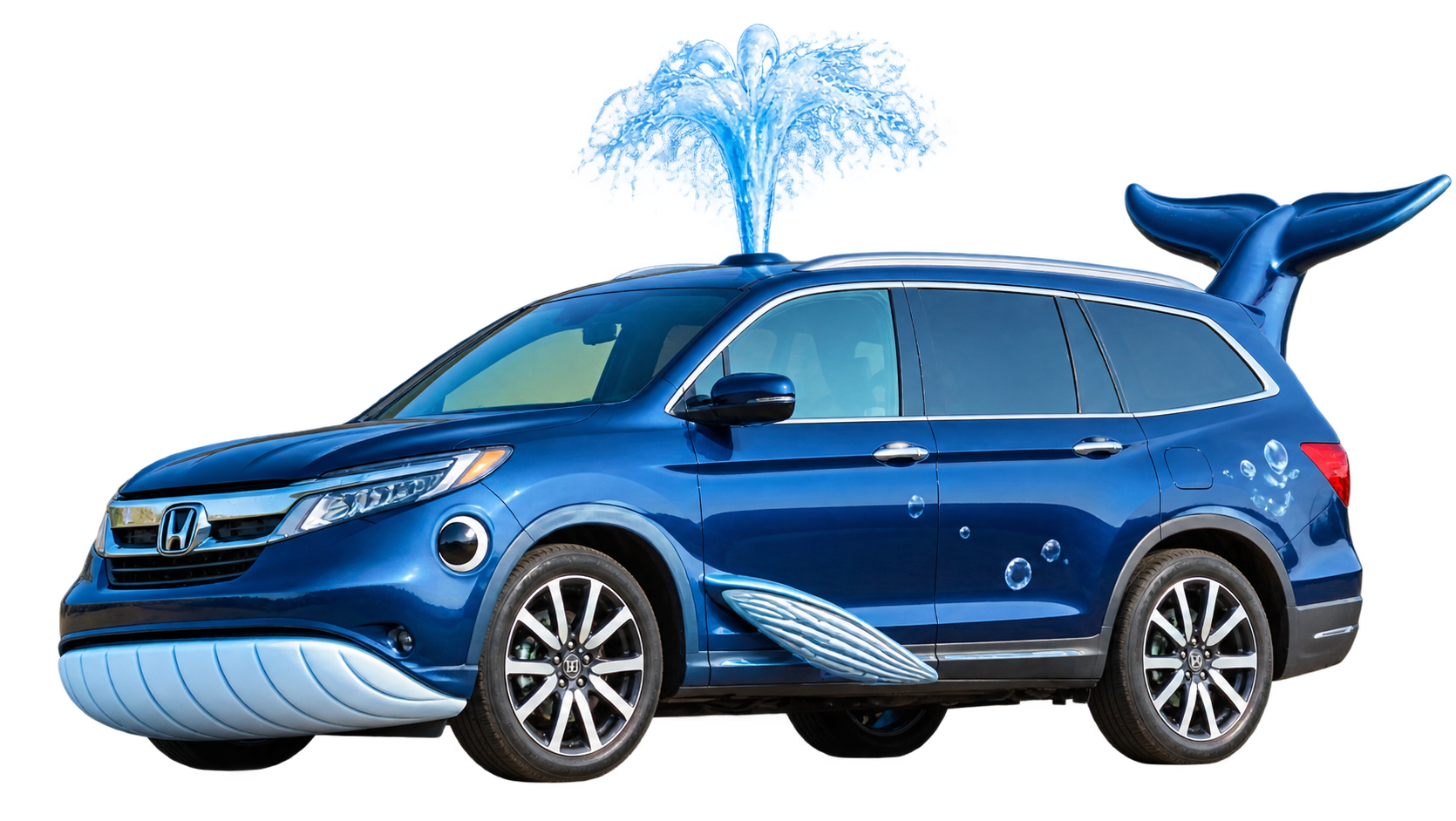
We bought a bright blue Honda Pilot.
If you had asked us at the beginning what color vehicle we pictured ourselves buying, bright blue definitely wouldn’t have been the answer. Color wasn’t one of the things we had decided was one of our top priorities, though. When this car turned out to be the strongest fit for the things that did matter, the color suddenly wasn’t much of a problem.
Now we love the car we affectionately call “the Blue Whale,” and I learned my favorite lessons from the entire purchase.
Being intentional about what matters also gives you permission to stop optimizing what doesn’t.
Did the Plan Work?
Looking back, the purchase followed what eventually became the Better Plans framework. The difference from my first car purchase wasn’t that I had suddenly become an expert on cars and negotiation, but I had become more intentional about the decision and planning.
More than a year later, we’re still happy with the Pilot.

Could something break tomorrow? Absolutely. Could our needs change? Of course.
Better Plans isn’t supposed to eliminate uncertainty.
It’s supposed to help you make a better decision with the information you have before uncertainty resolves itself for you.
Research Is Not a Plan
I can research almost anything to the point of exhaustion.
Today, AI makes that easier than ever. You can calculate financing scenarios, scan listings, and absorb hundreds of opinions before ever leaving your couch, but more information doesn’t automatically create a better decision.
You still have to decide what problem you’re solving, what matters most, what you can afford, what you’re willing to compromise on, what could make you regret the purchase, what you need to test, and what should make you walk away.
Those questions should be answered before someone starts selling you answers.
Build your plan first. Then go shopping.
Planning a major purchase?
Better Plans, Better Life is designed to help turn research, priorities, constraints, risks, and real-world testing into an intentional decision.
Leave a Reply